

AMR Surveillance · One Health · Uganda
One national platform that turns Uganda's AMR data into action.
NIAMR is a national interoperable digital platform that brings Uganda's AMR data together into a single, actionable picture — strengthening how the country detects, tracks, and responds to resistance.


12+
Multidisciplinary
Research Team

Interoperable · AI-Powered · One Health
National AMR intelligence, powered by interoperability and AI.
NIAMR connects Uganda's AMR data systems into one interoperable, AI-ready surveillance resource — designed to scale across all One Health sectors.
5
One Health sectors
National
Interoperable platform

Evidence-Based · Community-Driven
The right AMR information in the right hands, in time to act.
NIAMR connects the clinicians, labs, and district health teams who generate AMR data — so the people closest to the problem get timely, usable evidence for better decisions.
1
National platform
Serving
All One Health sectors
Our aim
What NIAMR is building
We are building NIAMR — a national, interoperable digital platform that integrates AMR data from across Uganda's existing systems to enable timely detection, surveillance, and evidence-based response, designed to scale across all One Health sectors.
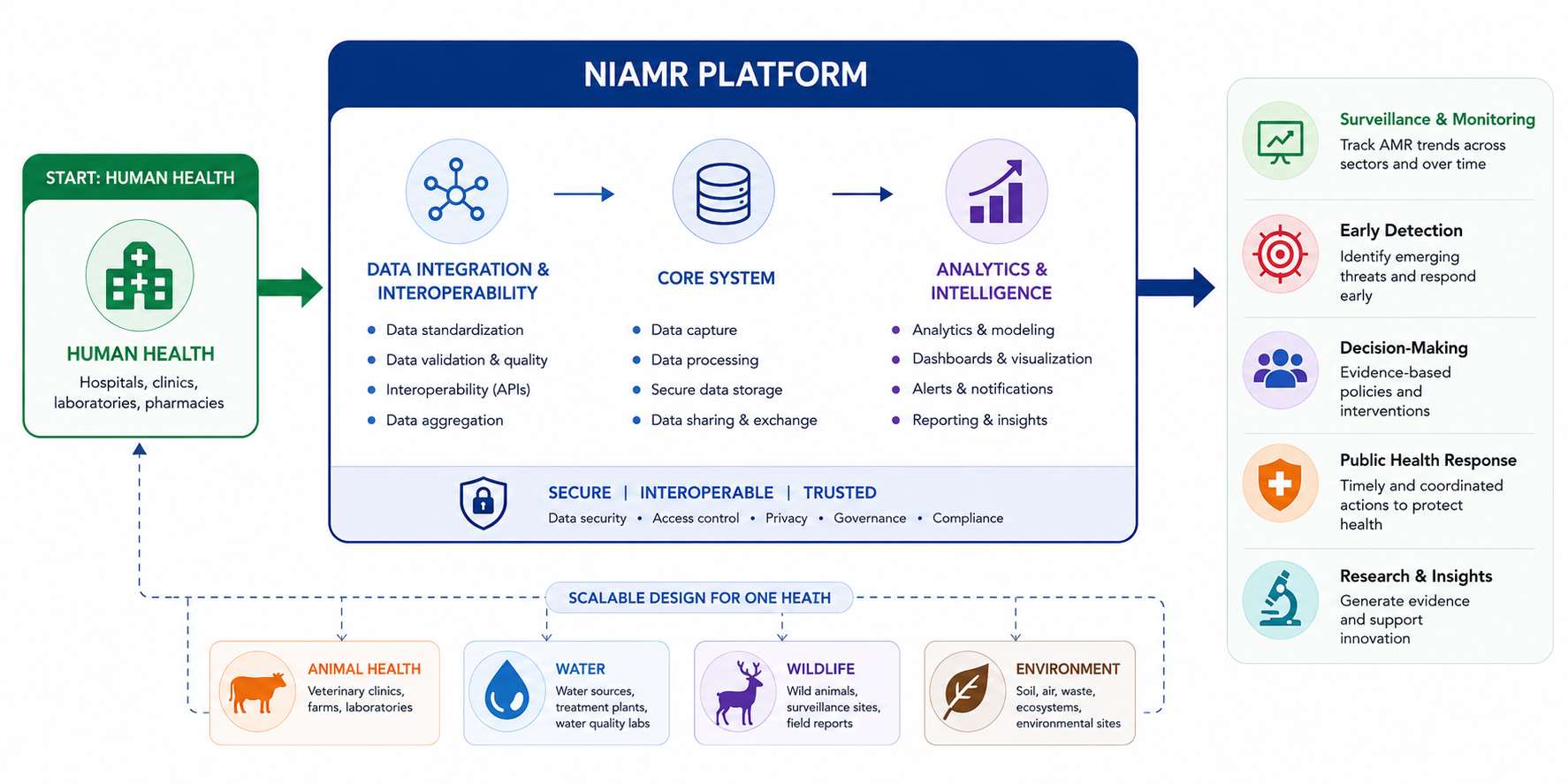
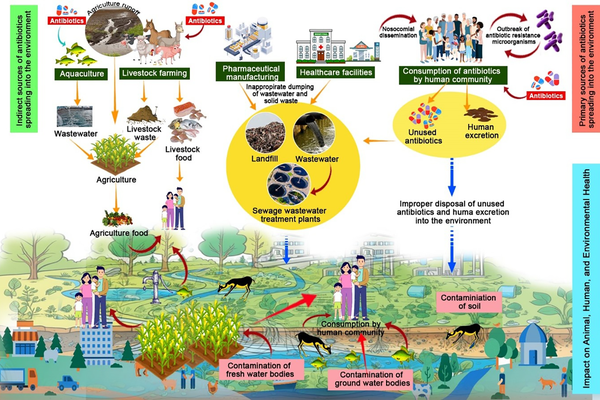
One Health — NIAMR's scope across human, animal, water, wildlife, and environment sectors
The challenge
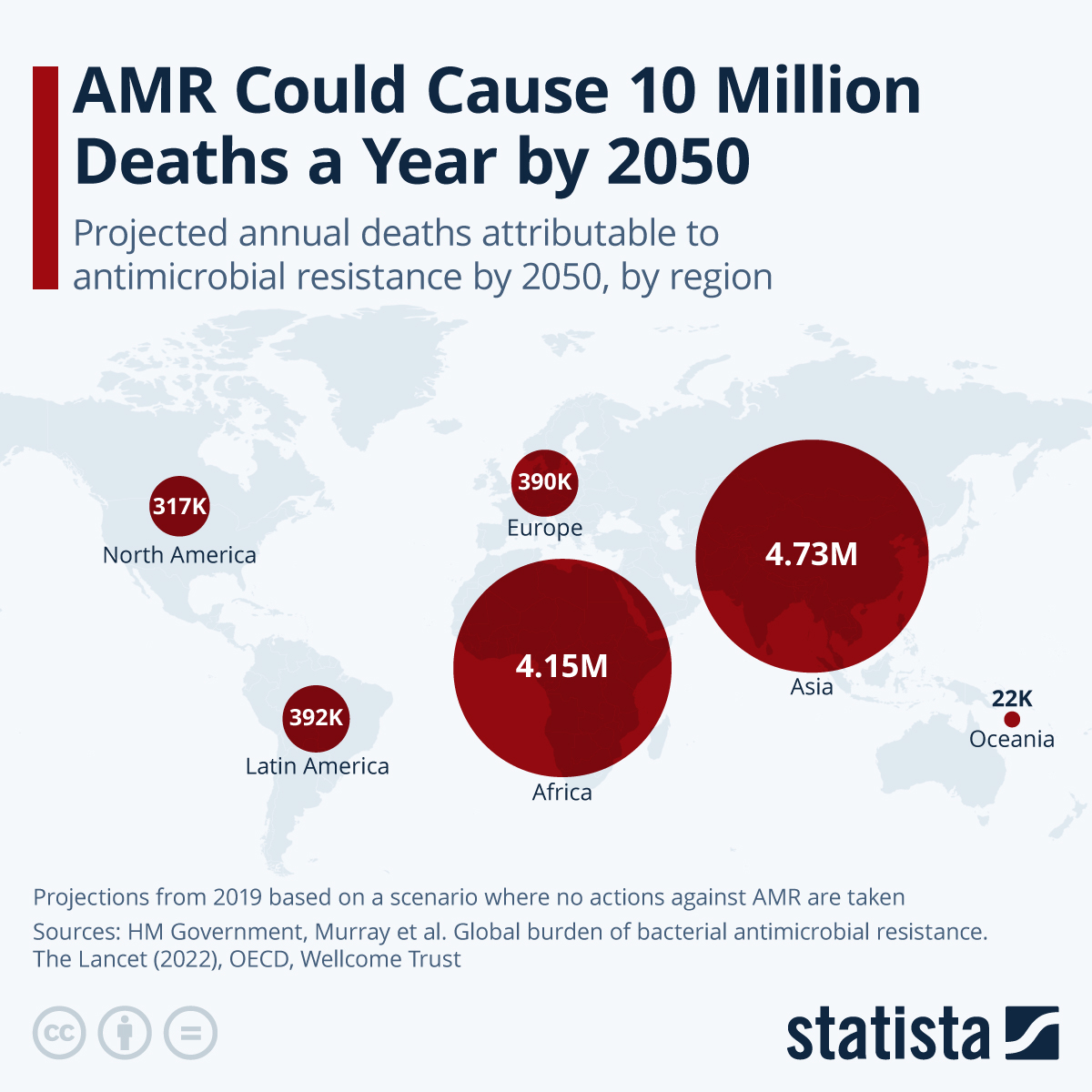
The scale of the AMR challenge
Antimicrobial resistance (AMR) is an urgent global public health threat that complicates treatment of infectious diseases. The burden is disproportionately high in Uganda as a low- and medium-income country.

1.3 million deaths / year
AMR is responsible for an estimated 1.3 million deaths worldwide each year (global burden).

Surpassed malaria, HIV & TB
AMR-associated mortality surpassed deaths due to malaria, HIV, and tuberculosis in Uganda in 2019 (Murray et al., 2022).
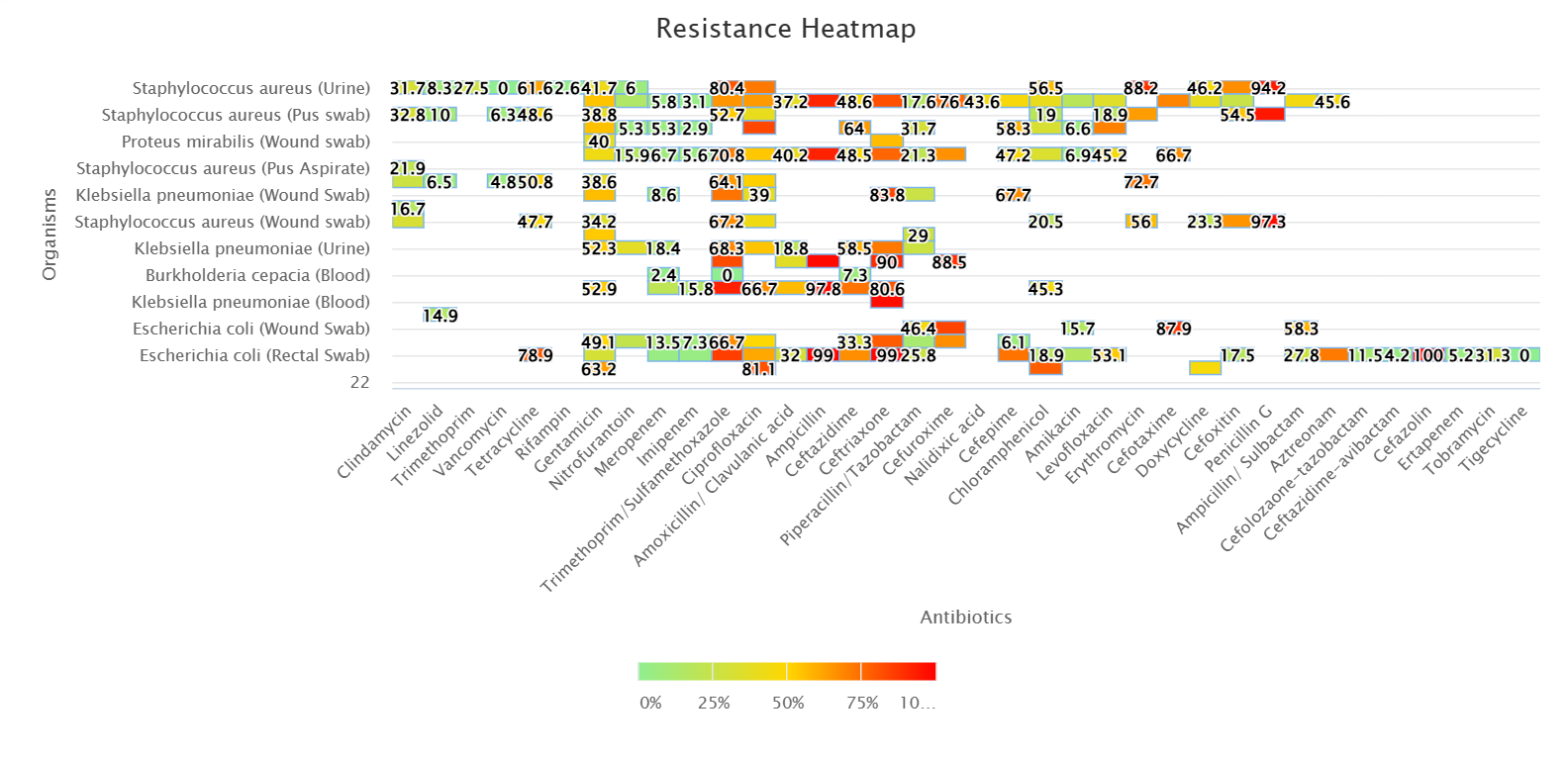
Research roadmap · 36 months · Feb 2026 – Jan 2029
Our five phases
Situation analysis & Baseline Assessment
National situation analysis and baseline assessment of AMR data generation, management and dissemination in Uganda.
Development and Implementation
Development and implementation of the integrated NIAMR platform in AMR high-burden districts.
Functionality Testing
Testing the functionality and performance of the NIAMR platform for AMR surveillance and data use.
Piloting
Piloting the NIAMR platform to assess data quality, system performance and user uptake for national roll-out.
Impact Evaluation and Costing for scaling
Evaluating the impact of NIAMR and conducting a micro-costing study to support integration across One Health sectors.
Results chain · what NIAMR produces and why
Outputs, outcomes & impact
5
Key outputs
Platform · Situation analysis · AMR data needs · Governance structures · User guides

Outputs
An interoperable and integrated digital AMR data capture, processing and sharing platform (NIAMR); situation analysis report; standardised datasets; governance structures; user & training guides.

Outcomes
Enhanced availability and use of integrated AMR data to support timely, evidence-based decision-making for AMR surveillance and response.

Impact
Early detection of AMR · Improved AMR surveillance and management · Integrated AMR data capture and sharing · Shared results for all One Health sectors for shared learning in combating AMR effectively.
Latest insights
News & articles from the team
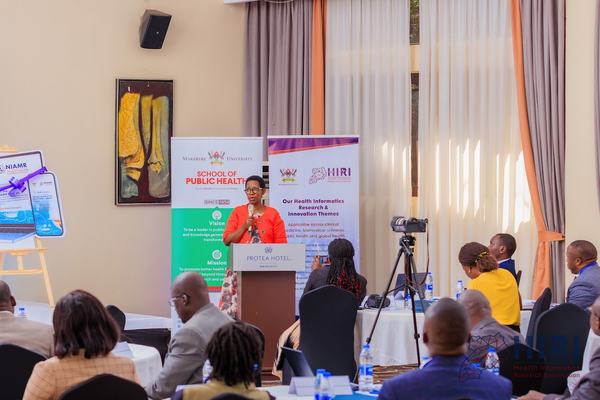
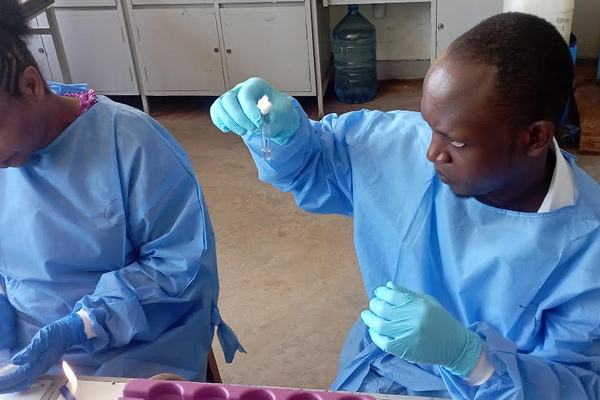
Community Engagement & Involvement (CEIs)
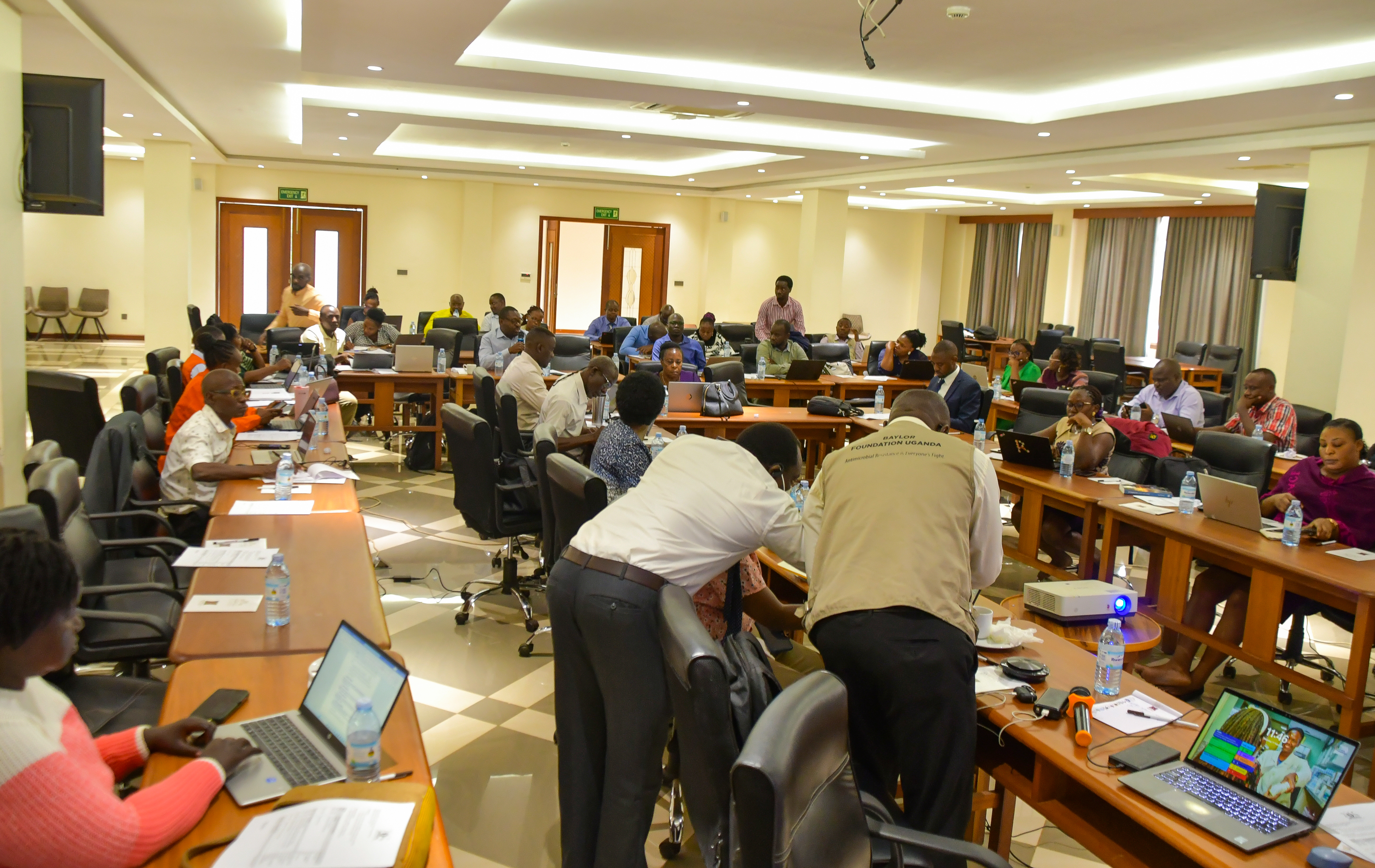
Upcoming events & workshops


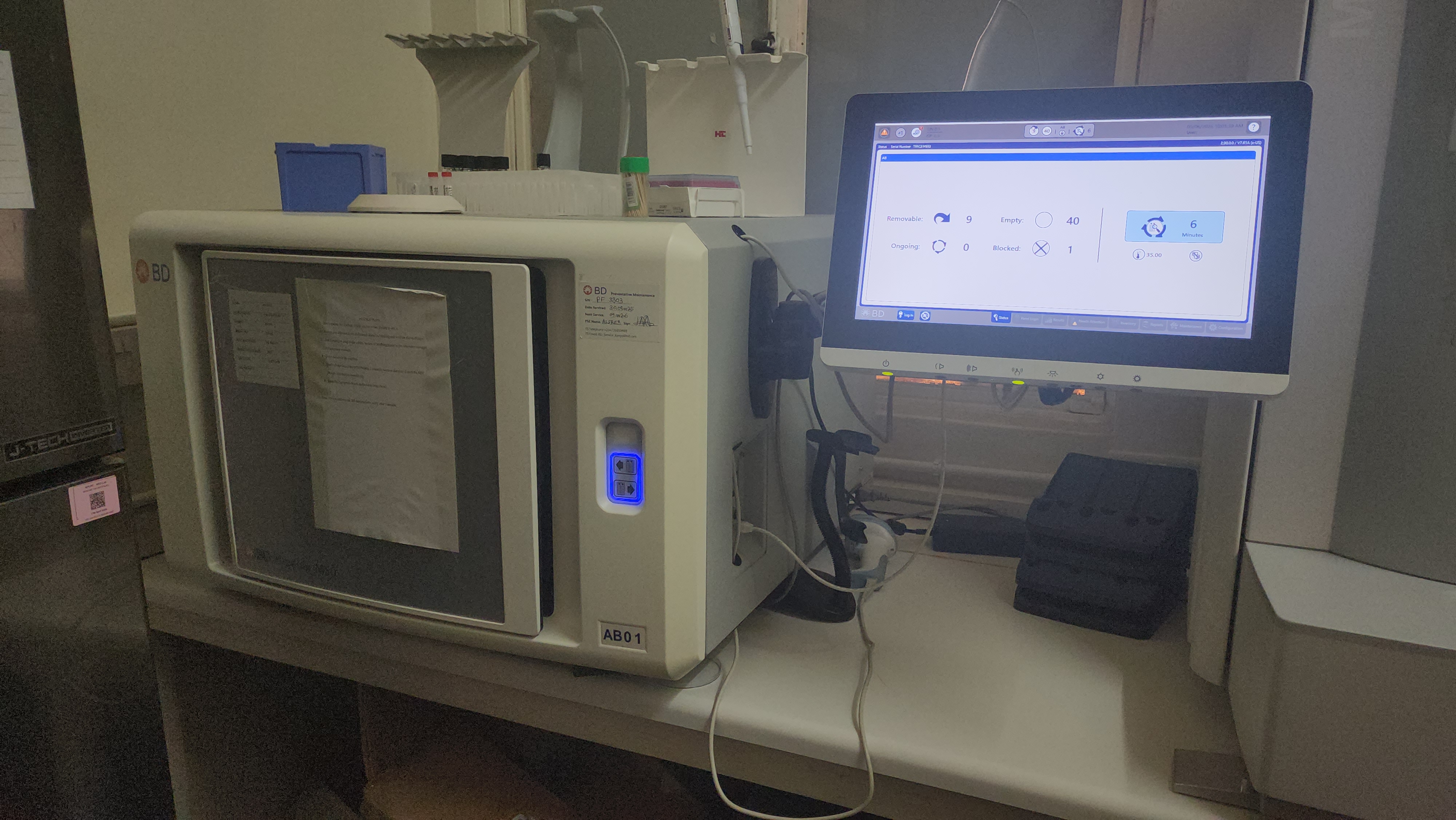
Outputs & resources
Publications, datasets & toolkits
Supported by
Funders & partners

UK International Development
UK's international development funding, backing global health research and capacity strengthening across partner countries.

DHSC
UK government department that underwrites the NIHR programme funding the NIAMR project.

NIHR
Funder of NIAMR under the Global Health Policy and Systems Research programme — award NIHR168786, over 36 months.

Makerere University
Lead research institution hosting the NIAMR project and coordinating the multidisciplinary research team.
MoH
Leads policy and governance of health data in Uganda; approves deployment of the NIAMR platform.

NHLDS
Provides stewardship for Uganda's AMR surveillance network and coordinates NIAMR's integration with national systems.

BCMCF-Uganda
Coordinates UK Fleming Fund Phase II investments and multisectoral AMR surveillance in Uganda.

MUST
Represents AMR academia and scientists; Uganda's second public university, with a community-impact mandate.
Get involved
Connect with the NIAMR project team
Collaboration, media, or research inquiries — reach the NIAMR project team. Meet the multidisciplinary researchers behind NIAMR — microbiologists, epidemiologists, informaticians and more.
Get in touch
Open/inquiries
Collaboration, media, or research inquiries — reach the NIAMR project team.
- Research collaboration
- Media inquiries
- Partnership proposals
- Data access requests
Explore our team
12+/researchers
Meet the multidisciplinary researchers behind NIAMR.
- Microbiologists
- Epidemiologists
- Informaticians
- Health economists